
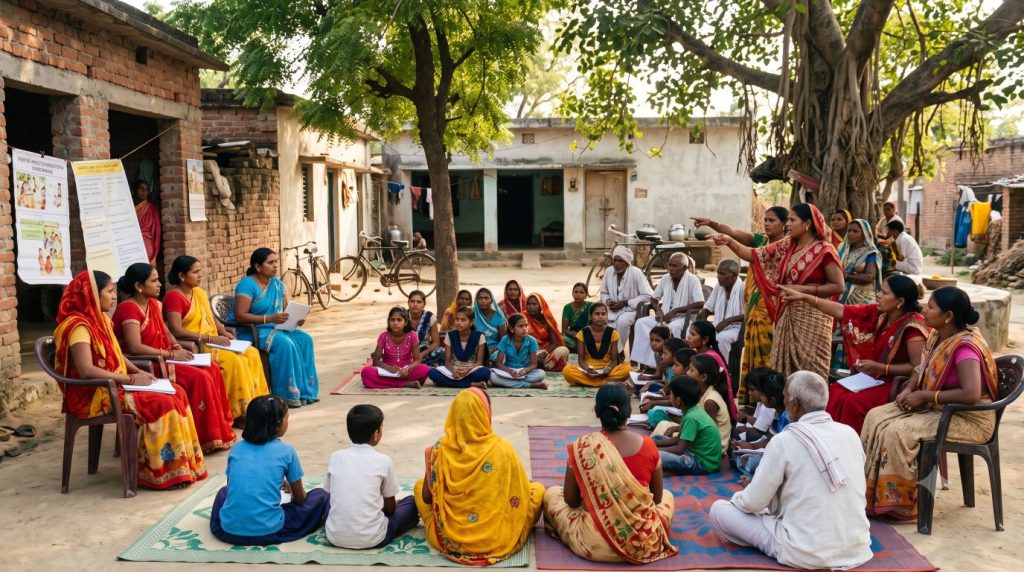
When many women in rural communities were excluded from opportunities because they could not read or write, a determined effort was launched to build their confidence and independence. Recognising that illiteracy prevented women from even opening bank accounts, 100 women were personally taught to write their names, enabling them to move from informal savings practices such as the traditional “grain bank” system to formal banking and financial inclusion.
The initiative went beyond literacy to address social justice and women’s rights. Harmful customs such as “Chudi” were challenged, support was extended to remarried women in asserting their legal rights, and cases of domestic violence were addressed through community engagement and advocacy.
Education remained a central focus. Through the “Nava Anjor” initiative, around 40 students received mentoring and support, while girls and women were taught up to Class 5 level and provided with books when financial constraints threatened their education. To protect families from exploitation and social harm, women-led “Chapa Dal” teams were formed to take collective action against illegal liquor outlets and gambling dens. By combining literacy, education, social reform and grassroots mobilisation, this effort nurtured a new generation of confident women leaders capable of driving lasting change within their communities.